
Your wonderful moments of the tour
This private tour offers a deeply atmospheric journey through St. Petersburg, blending imperial grandeur with centuries of intriguing history. You'll start by admiring the stunning baroque beauty of the Naval Cathedral, feeling the weight of Russia's maritime victories. The legendary Mariinsky Theatre will captivate you with its opulent blue-and-gold interiors and the whispered stories of emperors and artists. As you stand beside the ancient Egyptian Sphinxes and on the windswept Spit of Vasilievsky Island, you'll experience the city's mystical and dramatic energy. The tour weaves through the very cradle of the Russian Empire at the Peter and Paul Fortress and alongside the iconic cruiser Aurora, evoking a powerful sense of revolution and change. Wandering through the serene Summer Garden and visiting the mysterious St. Michael's Castle, you'll feel the romantic, sometimes tragic, pulse of a city that has always lived on the edge of legend.
What you will see in the tour

The tour program
Hotel Pick-up
Our guide will meet you in the hotel lobby. The tour is conducted by car or minivan, with licensed drivers operating vehicles for up to 3 people (cars) or 4–7 people (minivans). All vehicles are equipped with climate control for year-round comfort.
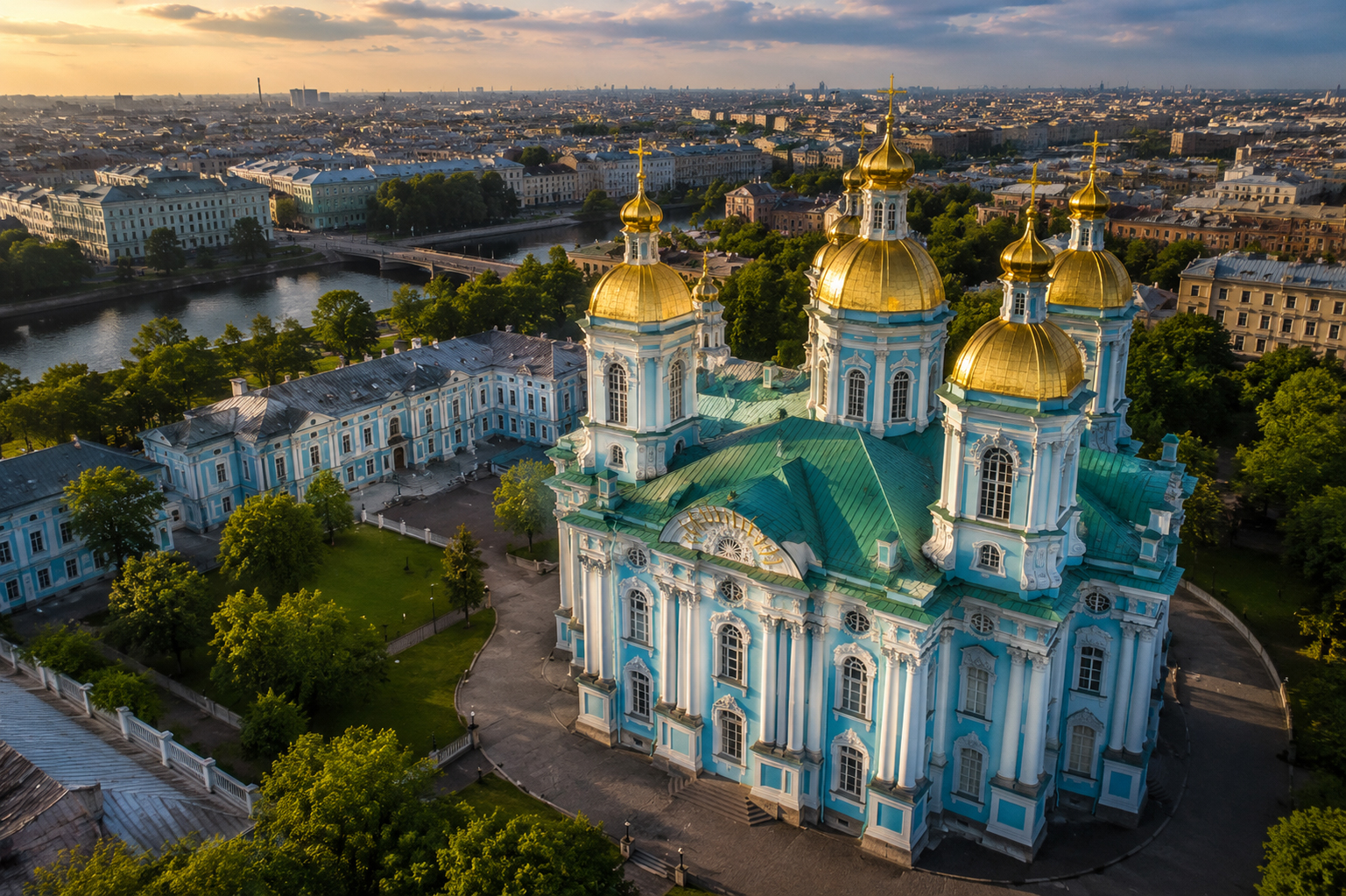
St Nicholas Naval Cathedral
This is one of the finest examples of the Baroque architectural style in Russia. The cathedral was built between 1753 and 1762 by the architect Savva Chevakinsky on the site of a former wooden church and can accommodate up to 5,000 worshippers.
The cathedral is called "Naval" because it was built on the territory of the naval regiment's courtyard, and Russian naval victories were solemnly celebrated here. The exterior of the cathedral was influenced by Empress Elizabeth Petrovna, who personally patronized its construction. The separate four-tier bell tower, crowned with a tall spire, was added in 1755–1758. The cathedral housed a particularly venerated 17th-century icon of St. Nicholas with a relic of his remains.
Major landmarks in Russian naval history include the victories at the Battle of Gangut (1714), the Battle of Chesma (1770), the Battle of Sinop (1853), and the defense of Sevastopol during the Crimean War. The cathedral survived the October Revolution and continued to function as an active church, serving as the main cathedral of the city from 1941 to 1999.
Mariinsky Theatre
This is one of the most famous opera and ballet theatres in the world, tracing its history back to 1783, when Catherine the Great founded its predecessor. The current building was constructed in 1859 by architect Alberto Cavos and was named in honor of Empress Maria Alexandrovna.
The theatre's interior is decorated in blue and gold tones — precisely the colors preferred by Empress Maria. The hall features a magnificent bronze chandelier weighing 2.5 tons, with 210 lamps and nearly 2,500 crystal pendants. Emperor Nicholas II rarely stayed in the Imperial Box because he preferred to watch performances from more modest seats to remain unnoticed by the public.
The acoustics of the orchestra pit were improved in an unusual way: beneath it lies a layer of broken crystal, which gives the orchestra's sound its famous "silvery" quality. The ceiling painting depicts dancing nymphs and portraits of 12 Russian playwrights.
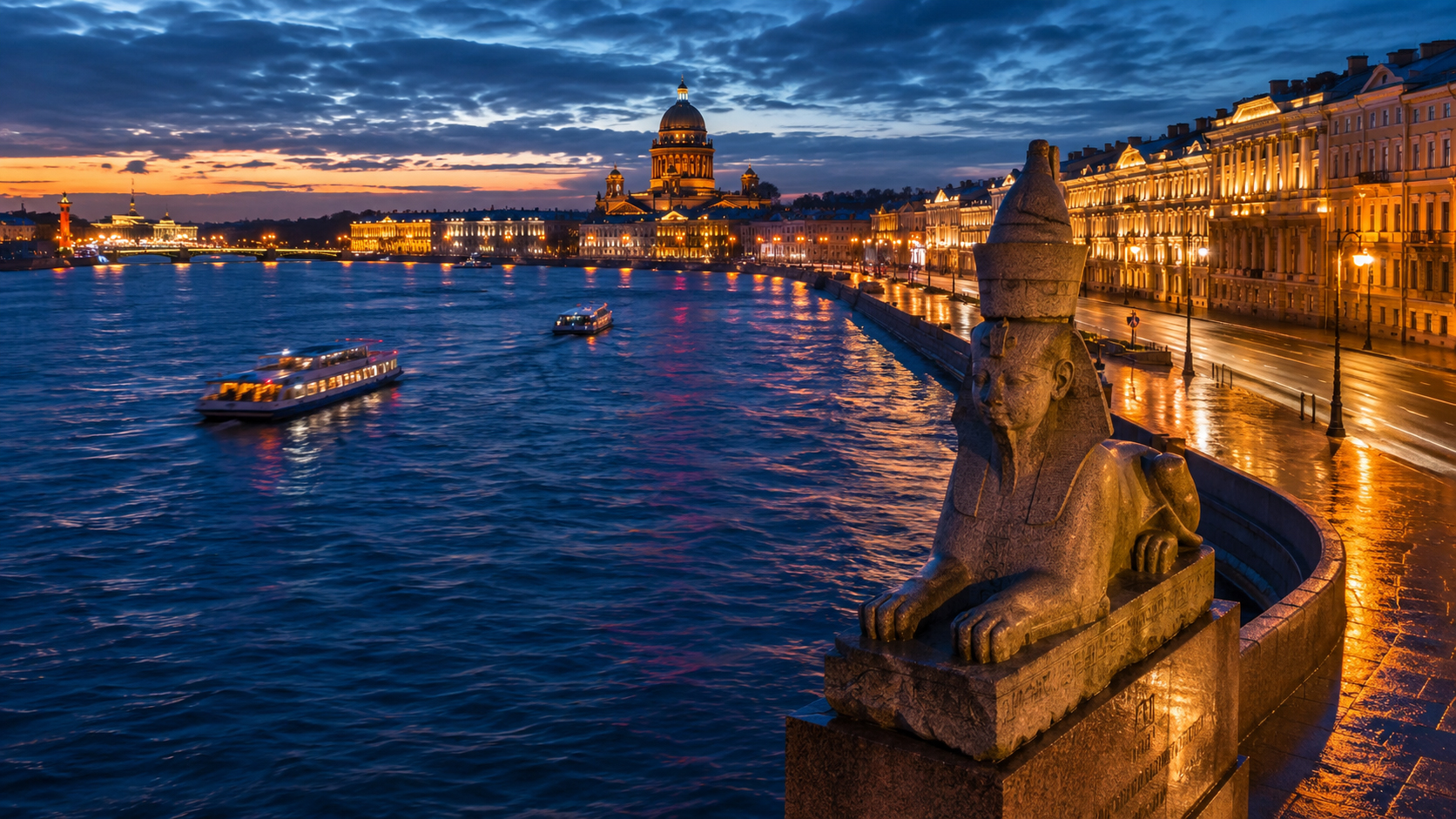
Quay with Sphinxes
These unique monuments are approximately 3,500 years old and were delivered to St. Petersburg from Egypt in 1832. They are carved from Aswan granite and originally stood at the temple of Pharaoh Amenhotep III in Thebes.
The sphinxes were originally destined for France — they had already been sold there, but the deal fell through due to the French Revolution. During sunset, the sun's rays dramatically illuminate the faces of the sphinxes, which are actually portrait images of the pharaoh. Among St. Petersburg residents, there is a legend that the sphinxes guard the entrance to an underground city and come to life during full moons.
The Spit of Vasilievsky Island
This legendary architectural complex serves as the famous postcard-view of the city. This location became the first port and sea gate of St. Petersburg due to its advantageous position where the Neva River splits into two branches.
It is always colder here than in any other part of the city because of constant winds blowing from the Gulf of Finland. The Rostral Columns, built in 1810 to a design by architect Thomas de Thomon, served as lighthouses for ships — in the 19th century, they were lit at night and in foggy weather. Citizens avoided the columns because they stored gunpowder and flammable materials, which made them potentially dangerous.
Peter and Paul Fortress
The first fortress of the city gave birth to St. Petersburg and the Russian Empire as a whole. The well-known Russian gesture meaning "drinking alcohol" — holding two fingers together like a glass — is connected to the fortress through the tradition of celebrating state holidays here.
Winter swimmers (known as "walruses") can indeed be found on the beach near the fortress, and in summer they come to sunbathe there. A watch worth $200,000 can be seen in the collection of the Museum of the History of the Peter and Paul Fortress.
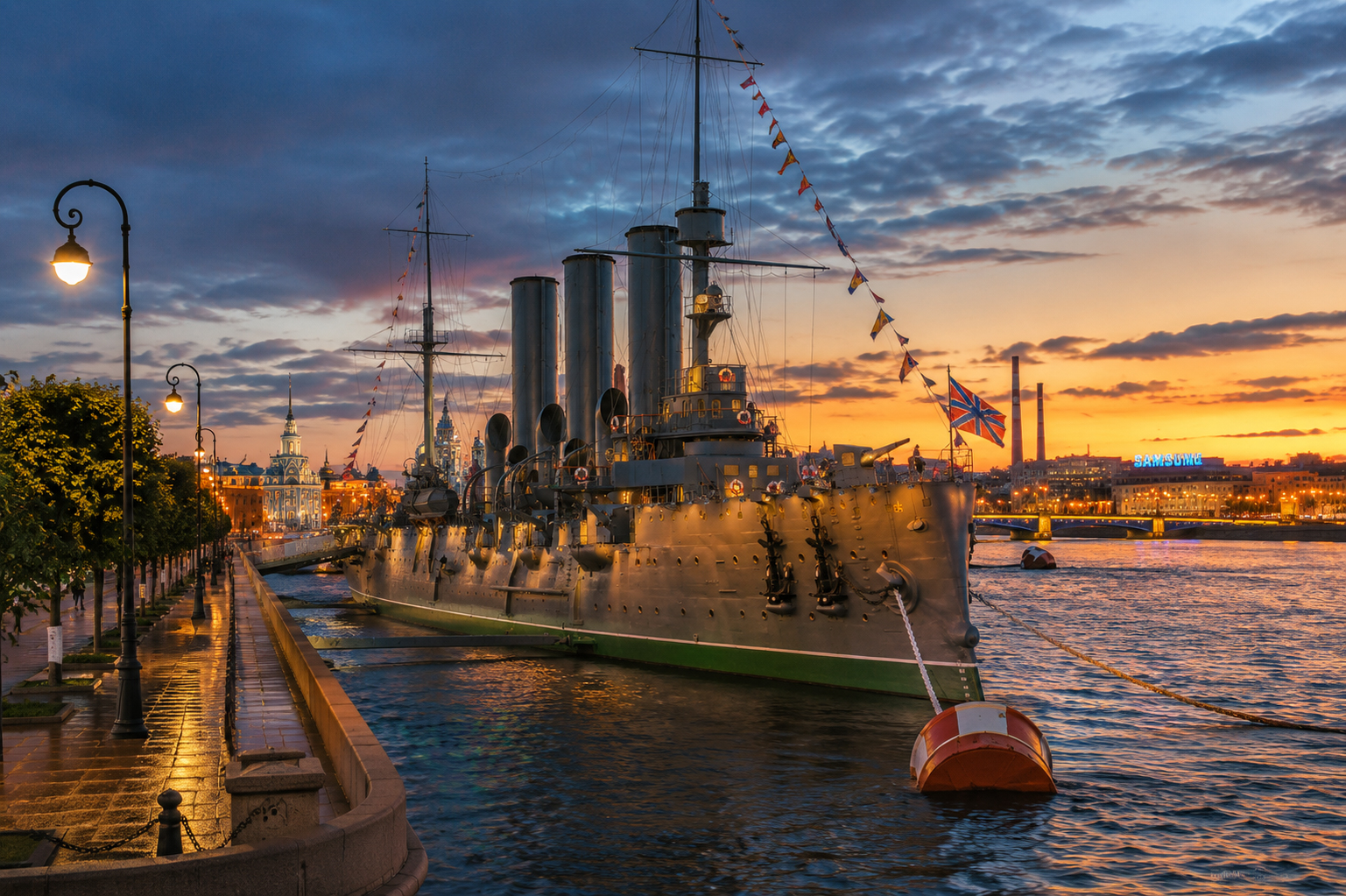
"Aurora" Russian Cruiser
The legendary cruiser, a symbol of the Socialist Revolution of 1917, participated in both World Wars.
In 1917, the Aurora played a key role: on orders from the Military Revolutionary Committee, it fired a blank shot that served as the signal for the assault on the Winter Palace. The cruiser suffered its heaviest losses during the Battle of Tsushima in the Russo-Japanese War. In the 1990s, a scandalous party organized by a Russian oligarch took place on board the cruiser.
Summer Garden (Closed on Tuesdays)
This is the oldest park in the city, founded by Peter the Great in 1704, just one year after the city's foundation. Peter wanted to surpass famous European parks, particularly Versailles, and make the Summer Garden the finest in Europe.
Vegetables and fruits were grown here for the first time in Russia, including potatoes, artichokes, and melons. Major celebrations were held in the garden, including assemblies and fireworks displays in honor of Russian military victories. Until the end of the 18th century, the garden was accessible only to the nobility, with commoners not permitted inside.
Chizhik-Pyzhik
The Chizhik-Pyzhik is one of the smallest monuments in the world, yet it has become a symbol of the city. The monument was installed in 1994 on the Fontanka River embankment near the 1st Engineer Bridge, opposite house No. 6, which housed the Imperial School of Jurisprudence from 1835. The students wore yellow-green uniforms resembling the plumage of a siskin, earning them the nickname "chizhik-pyzhik" (siskin-finches).
The monument stands only 11 cm tall and weighs about 5 kg. It has been stolen several times over the years but always returned to its place. A popular belief holds that if you make a wish and manage to hit the little bird with a coin, your wish will certainly come true.
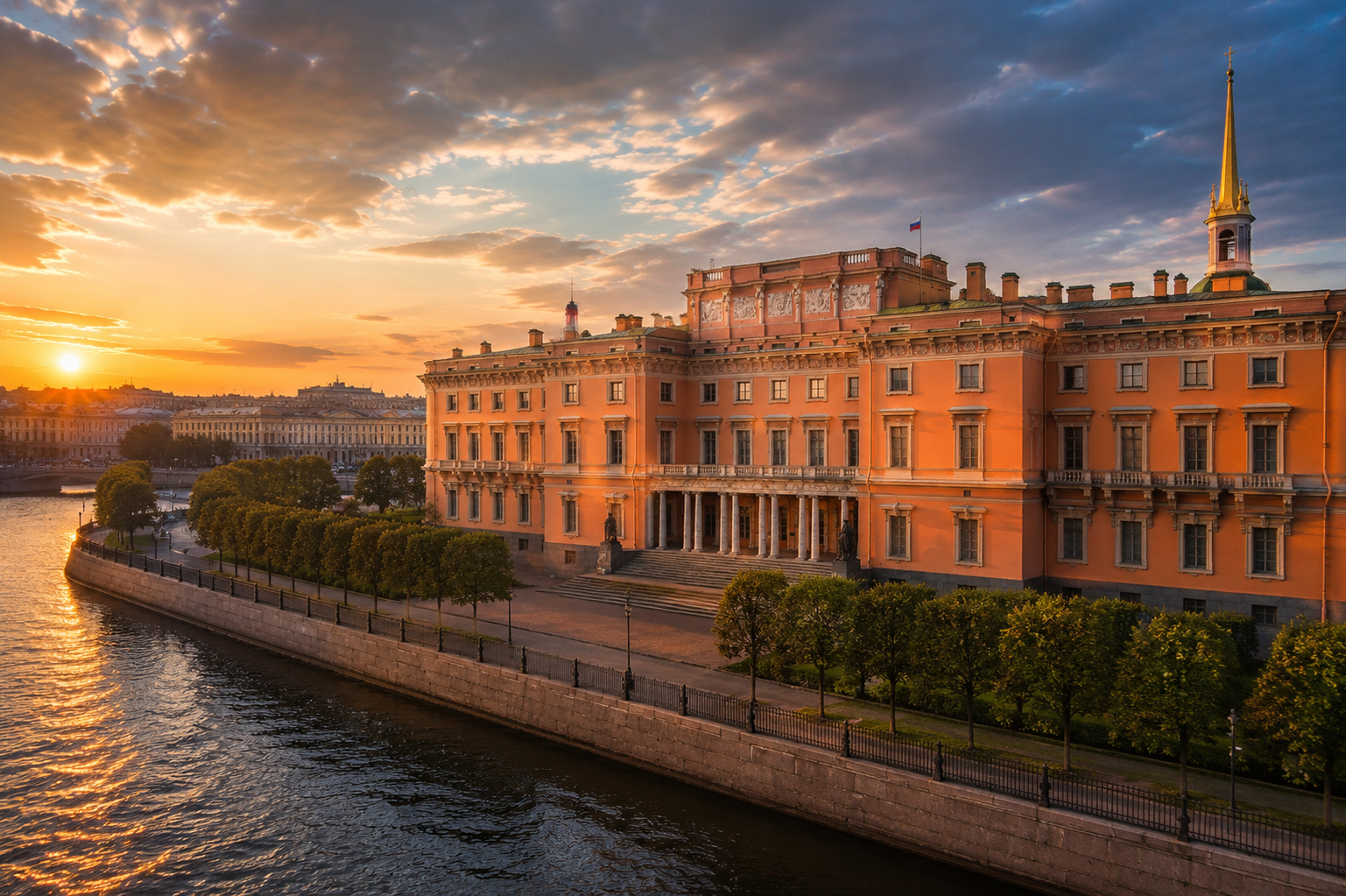
Saint Michael's Castle
The story of the castle, where Russian Emperor Paul I lived for only a few days before his assassination, remains shrouded in mystery. The exact age of Paul I at the time of his death — 46 years — can be seen in inscriptions on the castle walls.
The building is called a "castle" rather than a "palace," unlike other imperial residences, because Paul I wanted to create an impregnable fortress for his family. Legends say that the ghost of the murdered emperor can be seen wandering the corridors at night, and if you encounter him, you should say, "Greetings, Your Imperial Majesty."
Hotel drop-off
At the end of the tour, we will take you back to your hotel or any other place you would prefer.
Booking tour
Duration
1 Day
Complexity
Consultation needed
Type tour
Group
Season
Winter, Spring, Summer, Autumn
Price without accommodation
Saint Petersburg Must Drive
Important information:
-
The time can be adjusted to suit your schedule.
-
The price quoted is per tour, based on the number of participants you specified. If the group size changes, the total cost may be adjusted accordingly.
-
Cancellations made at least 7 days in advance are free of charge. Later cancellations will incur a fee.
-
If paying in cash, please use Russian Rubles. While your guide can stop at an exchange office if you have USD or EUR, we advise converting your currency beforehand. Please note that old or damaged banknotes may be refused.
-
Payment Methods: cash payment is required before the tour starts.
INCLUDED:
- all taxes
- private tour with personal guide
- hotel pick-up and drop-off
- metro tickets
NOT INCLUDED:
- Saint Basil’s Cathedral admission tickets
- lunch and so on
GUIDES
During the trips you will be accompanied by professional guides, who will not only take you into the atmosphere of the fabulous north, but will also make high-quality photos and videos, so you can keep your trip in your memory forever.

Anton
Over 7 years of experience

Marina
Over 7 years of experience

Dima
Over 8 years of experience

Alexander
Over 5 years of experience
Our vehicles
Your road trip will include comfortable vehicles


FEEDBACK ON TRAVELLING WITH US
WHAT OUR CLIENTS SAY ABOUT US

Your team went above and beyond by crafting an extraordinary program for us! I cherished every moment, from exploring the Tundra, just like the descriptions I read in high school, to admiring the stunning vistas of Teribeka and the Barents Sea. Interacting with huskies and reindeer brought us joy, and learning from the Saami people enriched our experience. I am deeply grateful to your team for taking such wonderful care of us.
Chonlatip Pipatanaboon
23.04.2024
We would like to say thank you very much for the incredible experience! Everyone in your team is highly professional and dedicated. We really enjoyed our time in Teriberka and at Husky Park, where we made unforgettable memories. The stunning landscapes and friendly animals added to our joy. All of you, but especially the guide, will always hold a special place in our hearts.
Attakrid Boongthong
14.04.2024
Thank you very much for a perfectly organized tour! Your team helped to make the trip unforgettable and filled with wonderful impressions. Very pleased with the individual approach to tourists. Thank you for regular communication and help in organizing leisure time. Also thank you to the guide for interesting excursions and stunning photos.